
June in Books
In which I read a lot of nonfiction
(Don’t) Stop Me if You’ve Heard This Before
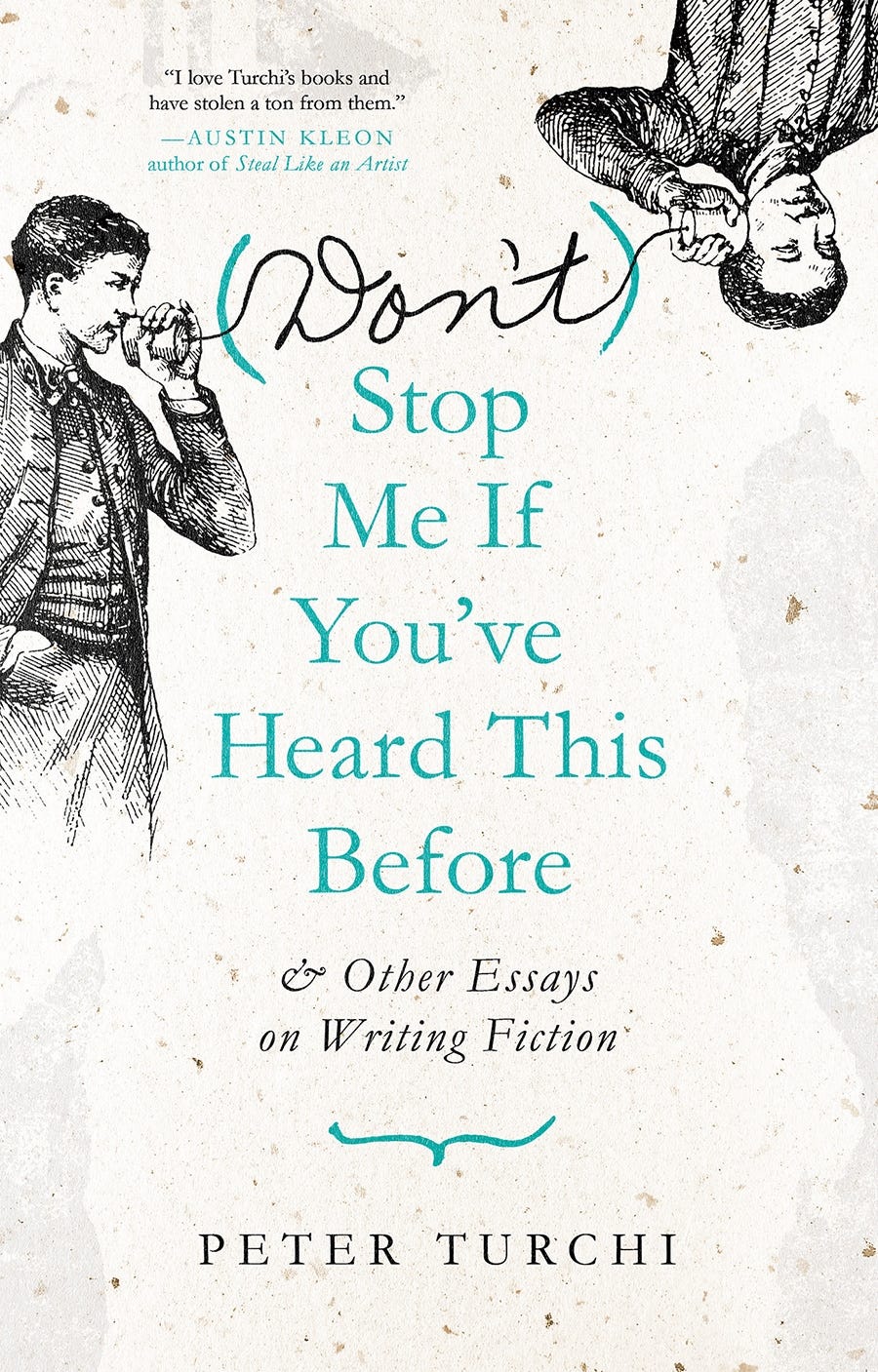
Turchi’s book is the last of the craft books that I checked out of the library, and this one is by far the best of the three. Turchi touches on a lot of higher-level craft topics (such as shifting narrative distance) that are valuable for folks ready to move past the basics. I particularly appreciated the essay on how asides and digression can be a part of stories; definitely a necessary corrective to the idea that absolutely everything has to move the plot forward.
What irritated me about this craft book was its dismissive attitude toward “adventure” stories. In Turchi’s estimation, adventure stories center around uninteresting conflicts. Real stories deal with inter/intrapersonal conflicts.
I also was not willing to go along with the examples that fit into the “normally this wouldn’t work, but this author does it well” category. In the cases I remember, it could just as easily have been the fact that the reader is willing to go along with an unconventional choice because of who the author is, not because of how the choice is executed.
Despite those unwelcome reminders of literary snobbery, I still hold that (Don’t) Stop Me is one of the best craft books I’ve read in years.
The Master and His Emissary
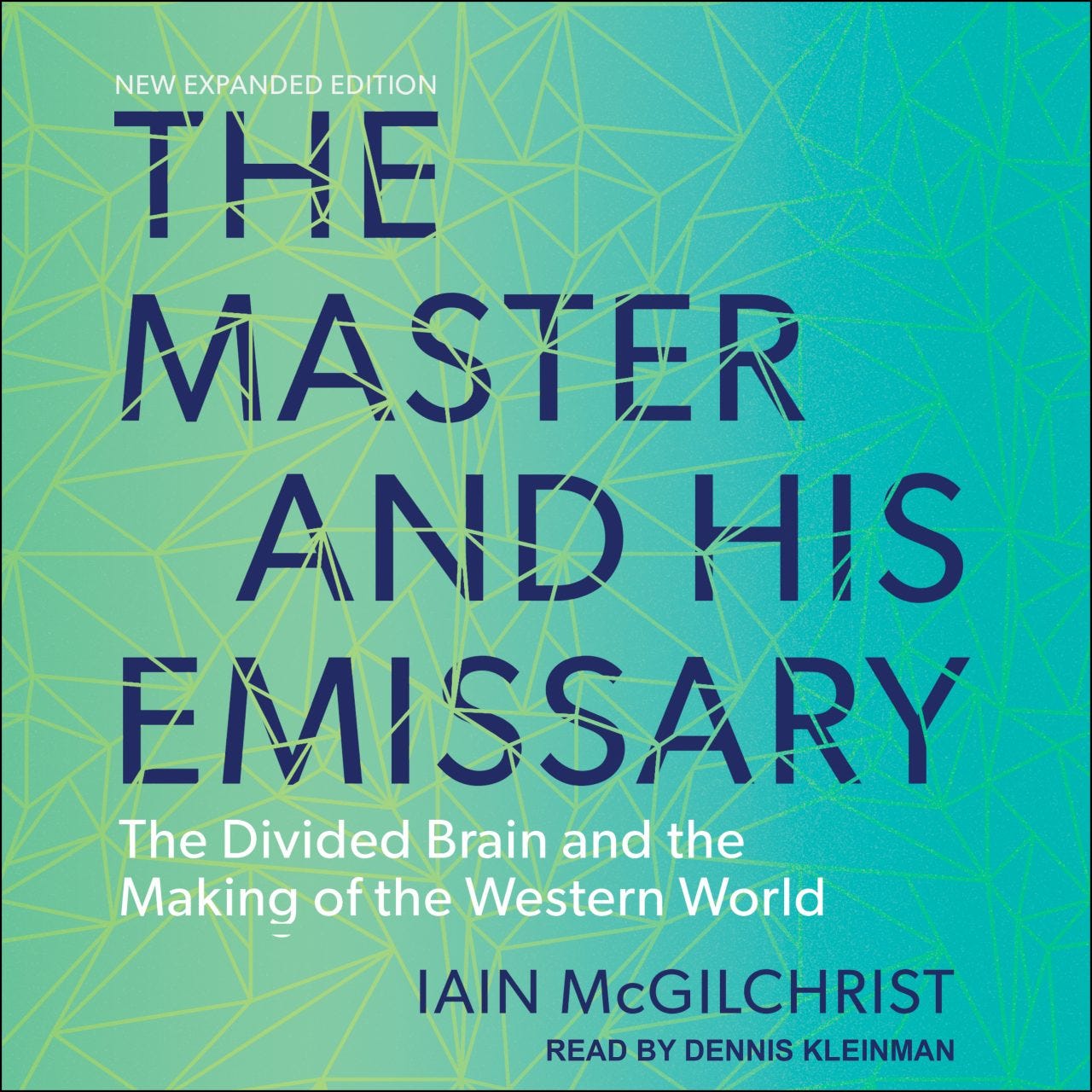
I first heard about McGilchrist’s work in an interview Terryl Givens did with the Be Faithful Podcast. When I looked him up, I found his 1500 page opus The Matter with Things, the sheer size of which was enough to scare me away.
The Master and His Emissary is a much more reasonable 600 pages.
It’s also a fascinating look into how our brains possess two distinct modes of cognition and both the individual and societal danger of letting one mode get the upper hand of the other.
The Master and His Emissary was the main catalyst behind my decision to throw out my outline for The Gray Quarter (which you can read about below), and is shaping up to be one of the books that has done the most to change the way that I view the world.
I’d love to hear about what you’ve been reading lately. Consider joining my Discord book club to chat about what you’re reading with me and other readers.
Less is More
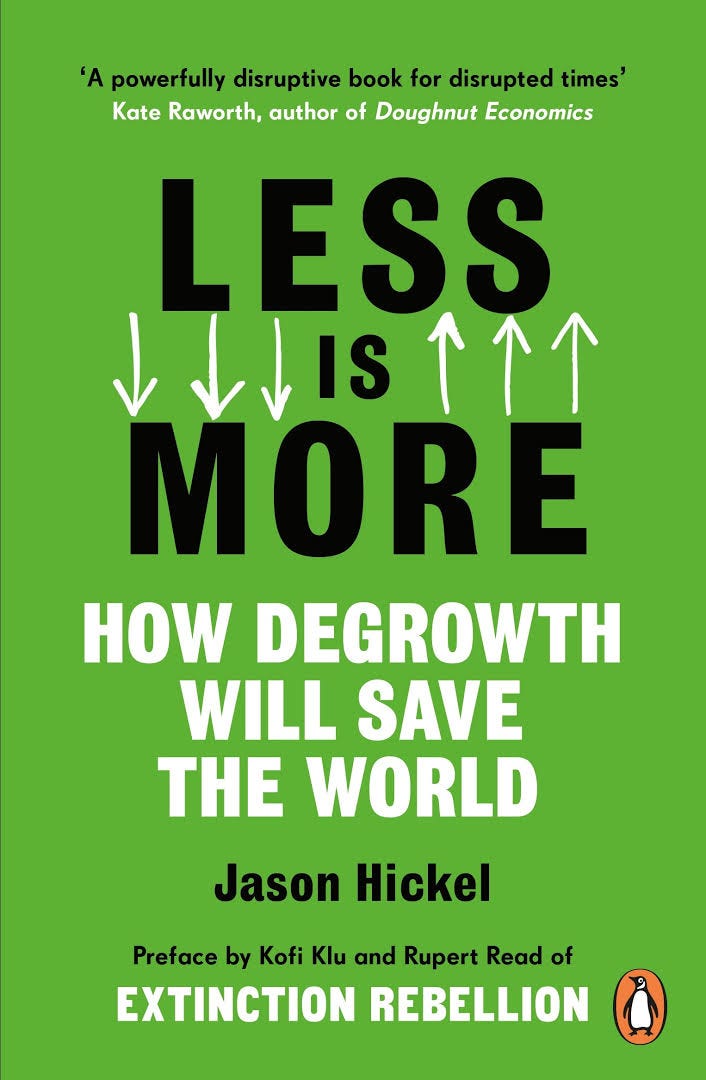
I’ve wanted to read Less is More since I read Slow Down by Kohei Saito about this time last year. I appreciated that Hickel focused more of his attention on policy proposals than on the state of the Earth and theoretical underpinning, and I found many of those proposals reasonable.
Hickel does paint history with a highly polemical brush. While learning about the enclosure movement was new for me, I also had to go to other sources to figure out what was historically supported and what was, for lack of a better word, spin.
This book did give me quite a bit of fodder for how a solarpunk world might look. If I end up writing in that genre, I think I’ll have to revisit Hickel’s work.
The Good Enough Job
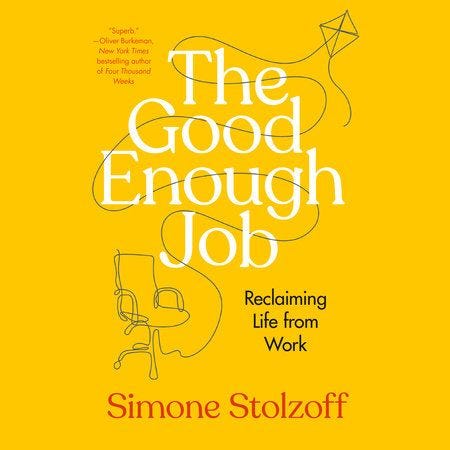
Stolzoff’s book has a different structure than I was expecting; instead of detailing how one “reclaims life from work,” he shares the stories of nine different white collar professionals and how they have navigated their relationships with work. I was a bit surprised that one of the chapters was dedicated to Ryan Burge (of Graphs about Religion fame), but it was a welcome surprise. The chapter about the once-aspiring academic hit close to home for me since this was the month that I met with a career counselor to start exploring career paths outside of academia.
This book doesn’t have much to do with what I write, but I think it offers some helpful ideas for how I write. Writing for me is a vocation, so I need time apart from work to engage with it. Stolzoff has provided a lot of things to consider as I days with space for life apart from work.
My Family and the End of Everything
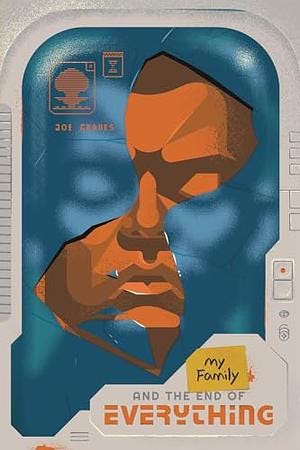
Graves’ book is an amazing collection of short stories about members of a family spanning from the near to the distant future. My favorite is about a robot who is trained to be a priest, which was simultaneously interesting and deeply moving. I appreciated how Graves was able to blend elements of more literary fiction with the trappings of sci-fi and how he treated religion as something real and powerful in the lives of its practitioners.
There’s a lot that I admire about the book and want to implement in my own writing. I’m especially intrigued by the idea of writing a short story cycle, though that may have to wait until I have less open projects!
Ooo, My Family and the End of Everything going straight to the top of the TBR pile.